Vector search is useful, but for project memory it is only the first stage.
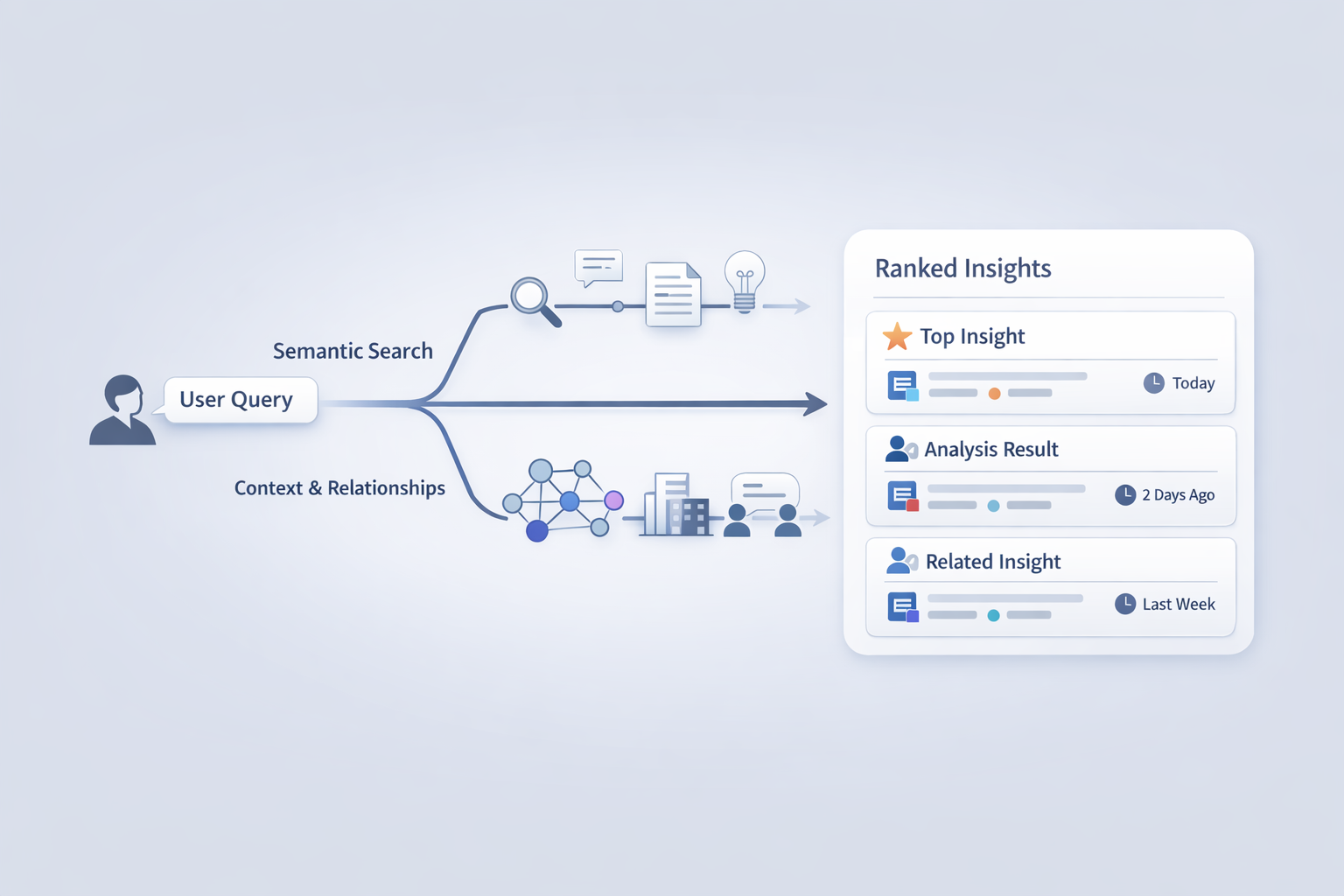
If you only need to find similar passages in a document set, embeddings can get you a long way. But software projects generate a harder retrieval problem. Teams do not just ask what text looks related. They ask what changed, what is still authoritative, and what evidence supports the answer.
That is why Accord Book is built around hybrid retrieval rather than a vector-only approach. The docs emphasize provenance, timeline reconstruction, and supersedes-aware handling. Those requirements point to a system that needs more than semantic proximity.
There are three technical reasons for this. Projects are relational, so relevant evidence may sit in connected records using different language. Projects are temporal, so the nearest match may be stale or replaced. And project answers need evidence, not just plausible similarity, if they are going to support change review or client-safe summaries.
In Accord Book's design, semantic retrieval is paired with structured memory and relationship expansion. That allows the system to start with relevant candidates, then widen or rerank using project links and update history. The practical result is better reconstruction, not just better recall.
A simple way to visualize that flow is below:
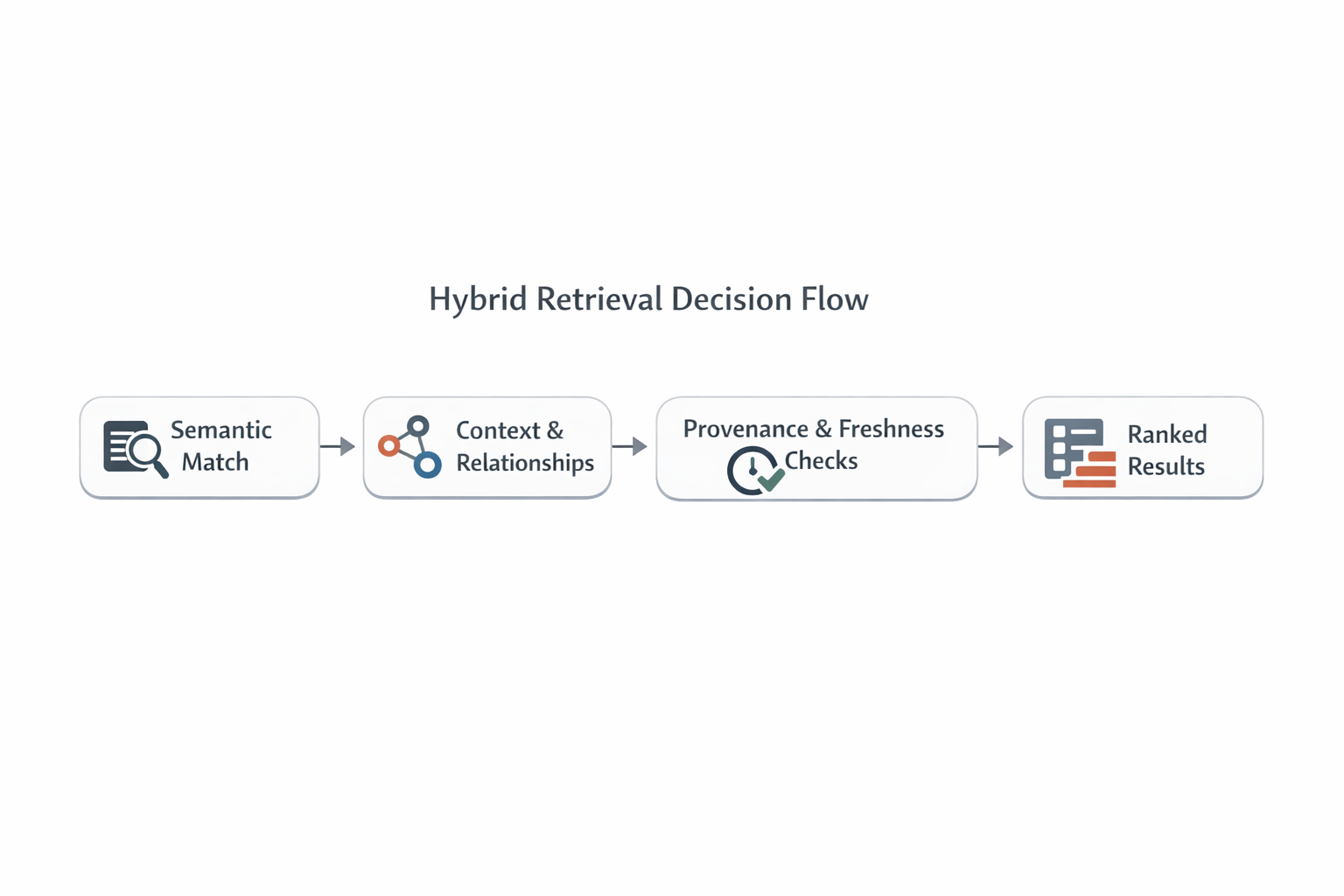
This matters most on the questions that actually break teams: multi-session decisions, evolving constraints, and knowledge updates that look similar on the surface but differ in authority. In that setting, vector search finds related language; hybrid retrieval is better at assembling the current state of a project.
Further reading