Most project context does not arrive in a neat format. It shows up as meeting transcripts, uploaded documents, links, chat messages, status notes, and small corrections spread over time.
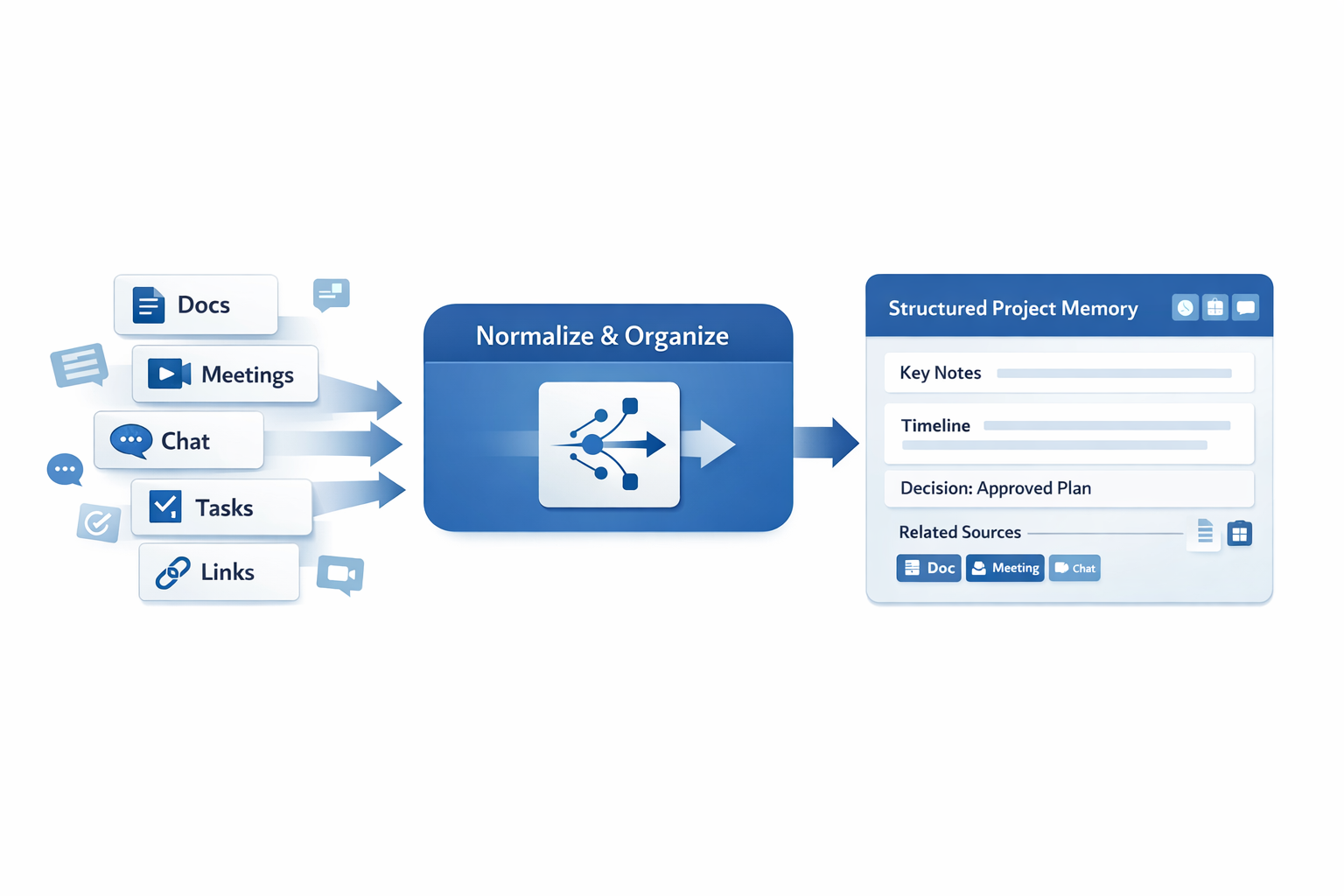
That is why a project-memory system cannot stop at collection. Raw inputs are not yet usable memory. They have to be normalized, structured, and linked back to their origin.
Accord Book's docs describe this as a multi-stage pipeline rather than a single ingestion step. First, source material from different channels is captured into a common record layer. Then an asynchronous extraction process turns that raw material into structured memory items such as facts, decisions, and project updates. Those records retain provenance, timing, and confidence signals so they can later support retrieval, review, and change handling.
This pipeline shape matters because project context is noisy. If a system only stores raw transcripts, users drown in text. If it only stores summaries, teams lose the evidence needed to trust the result. The middle layer—structured memory with traceability—is what makes the system operational.
The docs also show why asynchronous processing is a good fit. Extraction, curation, and downstream synthesis are not all user-interface events. They are background jobs that improve project memory over time as new material arrives.
A more detailed view of that pipeline looks like this:
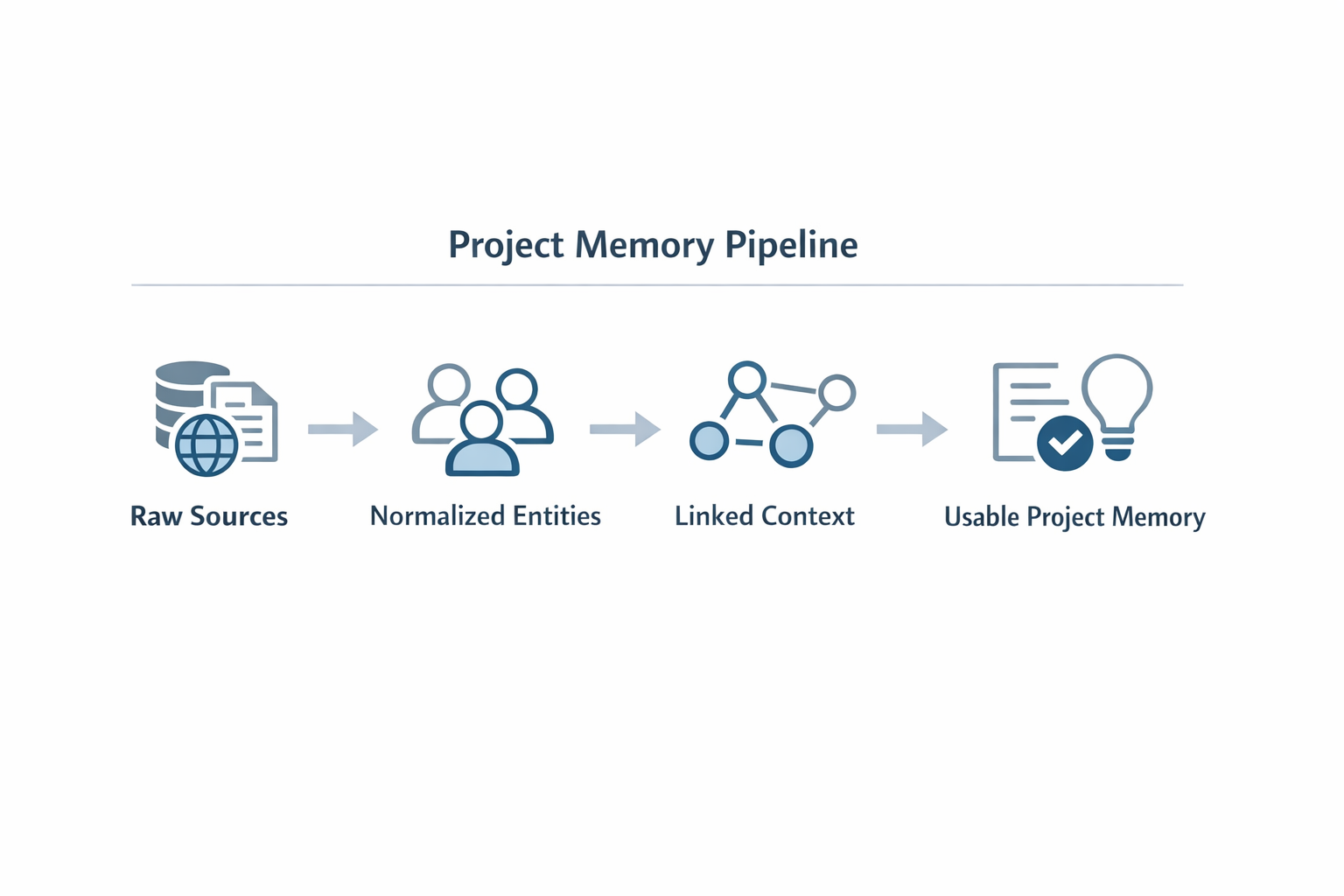
A subtle but important detail is that memory items can reflect change, not just accumulation. The system tracks corrections and newer states rather than treating every record as equally current forever. That is what makes the memory useful for retrieval, conflict review, and project status synthesis later on.
Further reading