A core design question for AI systems is not whether they can generate documentation. It is whether they should be allowed to publish it as truth.
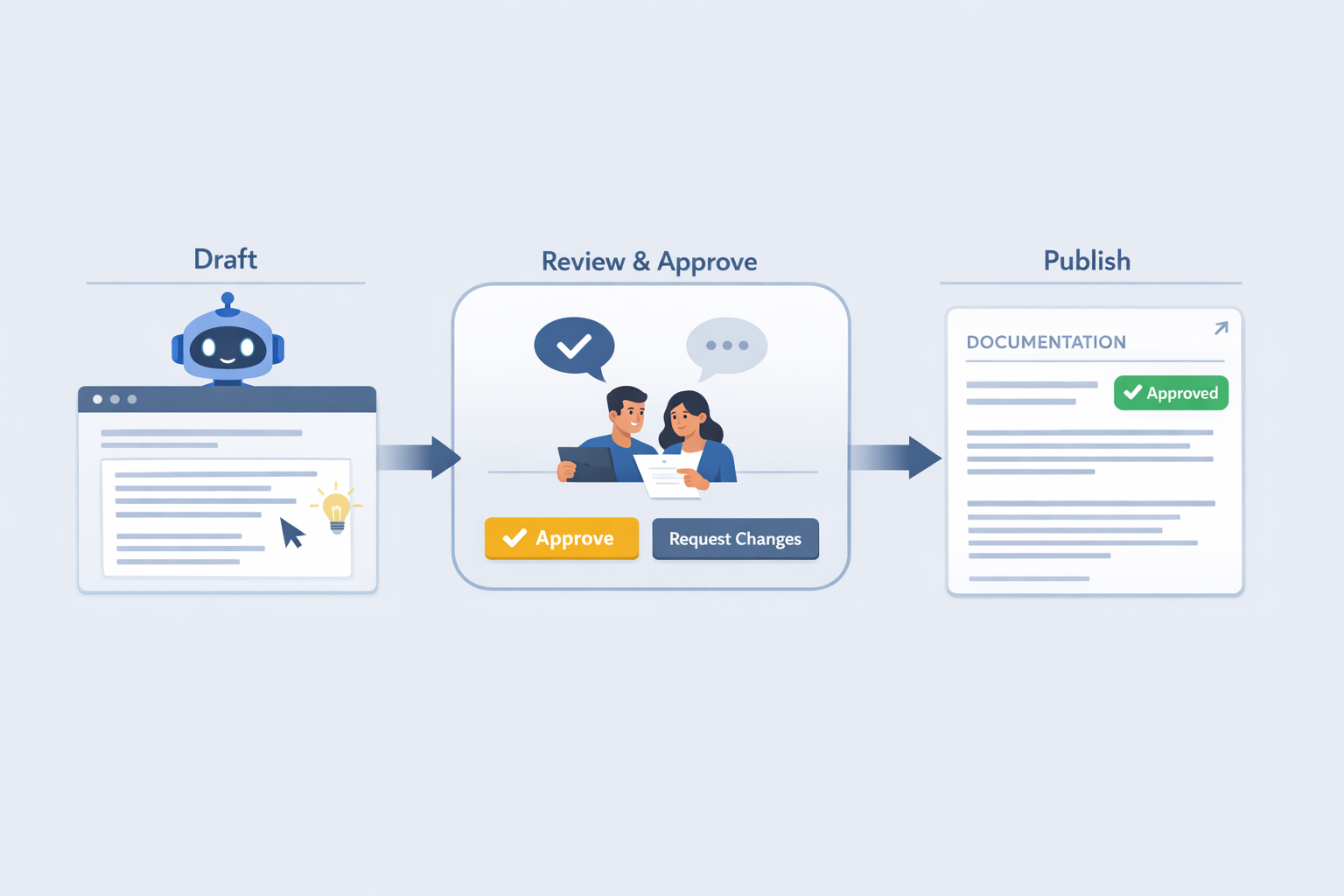
Accord Book's documentation architecture takes a clear stance: AI proposes; humans publish. Once generated documents begin feeding other agents or shaping accepted project context, draft text is no longer harmless. It becomes operational.
The docs describe a workflow where AI can synthesize architecture context and decision records from bounded project evidence, but publication remains gated by human review. That is a strong design choice for brownfield software work, where existing code, scattered documents, and half-settled decisions need careful reconciliation.
Technically, the important move is the separation of layers:
- Evidence and memory: project records, decisions, and supporting context.
- Draft synthesis: AI-generated documentation assembled from those inputs.
- Published truth: the approved version that downstream tools are allowed to treat as authoritative.
That separation creates a healthier control plane. The model can do the high-leverage work of collecting context and proposing updates, while a human still decides when the result is stable enough to count.
The review boundary is easier to understand in flow form:
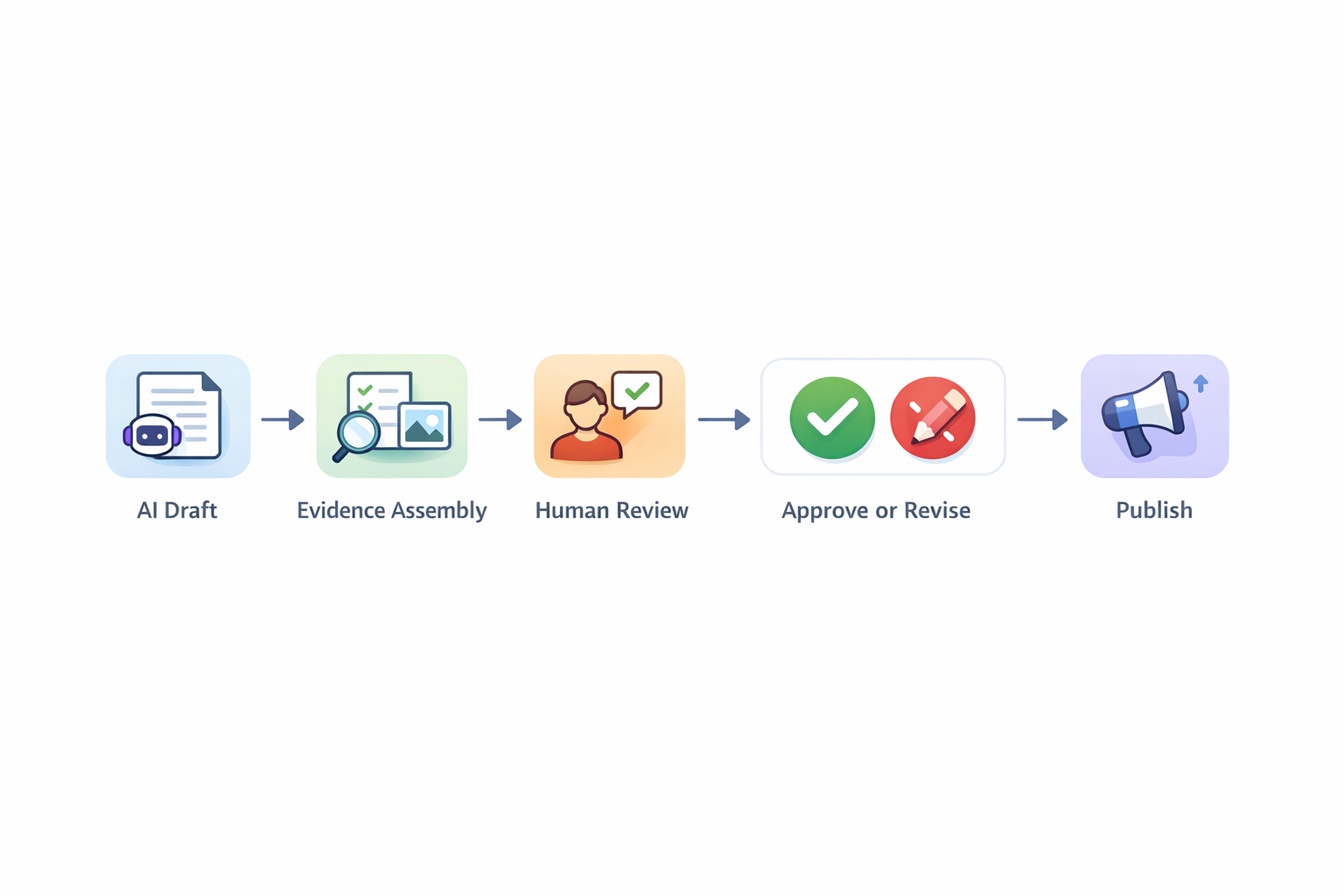
This is not an anti-AI posture. It is a pro-legibility one. A fast drafting loop is valuable. An explicit publish step is what makes it trustworthy.
Further reading